The Epoxy Floor Installation Process: Products, Prep, and Timeline in Springfield, MO
A step-by-step look at how we install epoxy floors in Springfield, Ozark, Nixa, and Republic MO — diamond grinding, crack repair, base coats, flake, and polyaspartic topcoats.
Most people searching for epoxy floors in Springfield MO have already seen the finished photos. What they haven't seen is the work underneath: the grinding, the crack repair, the moisture testing, and the product choices that decide whether a floor lasts two years or twenty. This is the exact process we follow on epoxy garage floors across Springfield, Ozark, Nixa, Republic, Rogersville, Battlefield, Strafford, and Fair Grove, Missouri.
Step 1: On-site evaluation and moisture testing
Every job starts with a look at the slab. We check the age of the concrete, look for spalling, oil saturation, previous coatings, and control joint condition, then test for moisture vapor. Ozarks slabs — especially older Springfield garages and walkout basements in Nixa and Ozark — often push moisture up through the concrete. If vapor drive is high, a moisture-tolerant primer goes down first. Skipping that step is the single most common cause of coating failure in southwest Missouri.
Step 2: Diamond grinding, not acid etching
We mechanically profile the slab with a diamond grinder and HEPA dust extraction. This opens the concrete pores to a CSP 2–3 profile so the coating bonds into the slab rather than sitting on top of it. Acid etching and pressure washing — the method in most big-box DIY kits — cannot remove contaminants or create a reliable profile, which is why those floors peel at the tire tracks first.
- Grind the full floor, then edge and hand-grind corners and door thresholds
- Shot blast or aggressively grind oil-saturated areas near the parking bays
- Vacuum and tack the slab so no dust contaminates the base coat
Step 3: Crack, joint, and spall repair
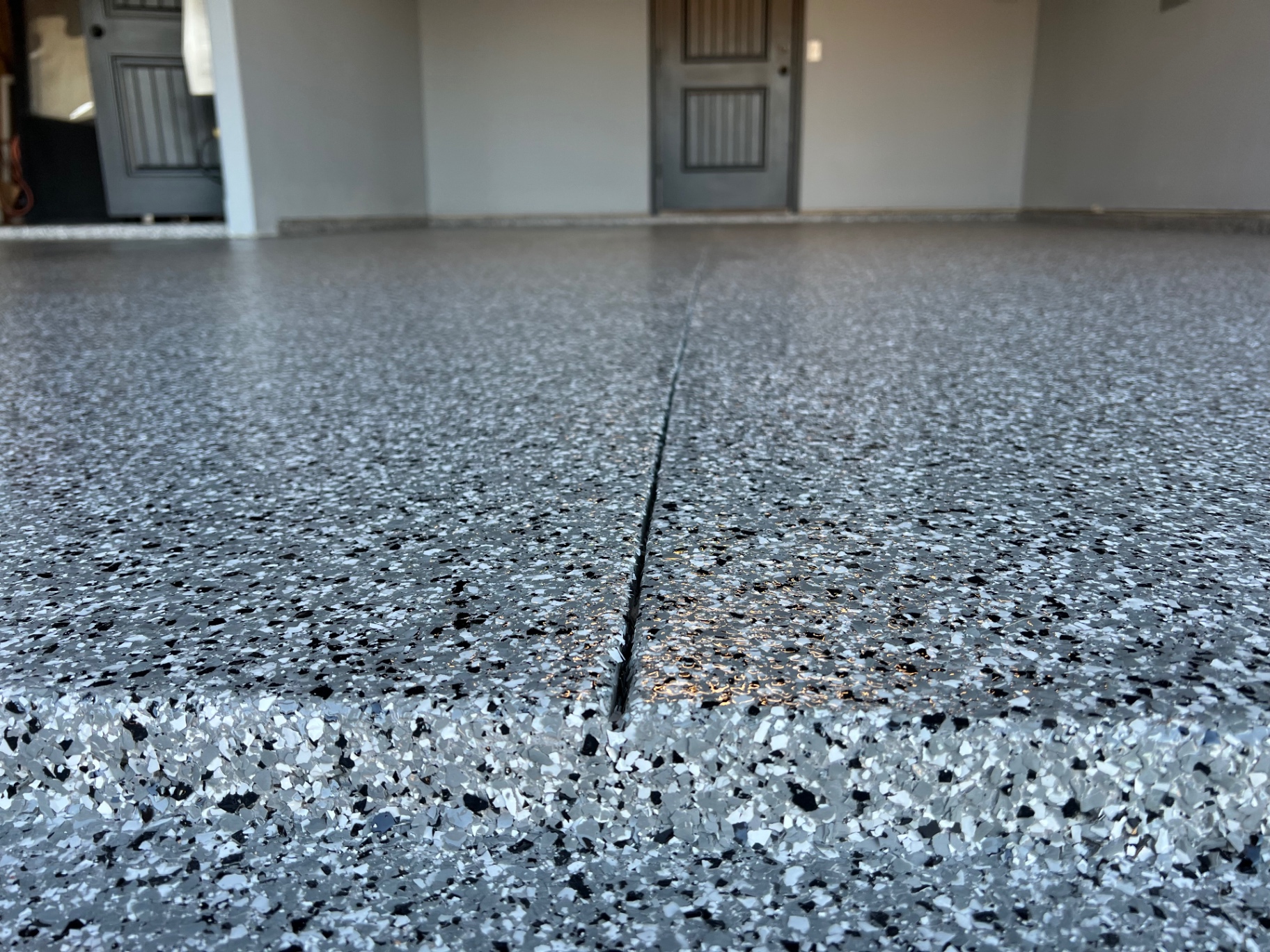
Cracks and pitted spots get chased out, vacuumed, and filled with a rigid polyurea or epoxy patching compound, then re-ground flush. Control joints can either be filled for a seamless look or honored so the slab can move. On older Springfield homes with settled slabs we usually recommend honoring the joints — it looks slightly less seamless but prevents telegraphing cracks later.
Step 4: The products we use and why
"Epoxy floor" is a category, not a single product. A real system is layered, and each layer does a different job.
- Primer / moisture barrier: a penetrating epoxy primer that soaks into the profiled slab. On damp basements we switch to a moisture-mitigating primer.
- Base coat: a 100% solids epoxy, roller and squeegee applied at a controlled mil thickness. This is the body of the floor and where the color lives.
- Decorative flake (vinyl chip): broadcast to rejection into the wet base so the floor is fully covered. Flake hides dust, adds slip resistance, and gives the floor its texture and depth. Blends range from subtle gray to bold red or black.
- Topcoat: a polyaspartic or urethane clear coat. This is the wear layer — it handles hot tire pickup, road salt from Missouri winters, UV near garage doors, oil, and cleaning chemicals. Anti-slip additive can be blended in on request.
Solid-color floors (no flake) are available and cost less, but flake systems hold up better visually in a working garage or shop because they hide dirt between cleanings.
Step 5: Scraping, cure, and topcoat
Once the flake cures, we scrape the entire floor to knock down sharp edges and vacuum it clean, then roll the clear topcoat. Depending on the system and the temperature, a second clear pass may go down for higher-traffic shops and commercial spaces.
How long does an epoxy floor take?
- Day 1: grind, repair, prime, base coat, and flake broadcast
- Day 2: scrape, vacuum, and topcoat
- Foot traffic: usually about 24 hours after the topcoat
- Vehicle traffic: typically 3–5 days, depending on cure conditions
A standard two-car garage in Springfield or Republic is normally a two-day install. Larger shops, commercial floors, and slabs with heavy repair needs take longer.
Where epoxy floors work best around the Ozarks
- Garage floors in Springfield, Battlefield, and Strafford MO
- Walkout basements and rec rooms in Ozark and Nixa MO
- Shops, barns, and outbuildings in Republic, Rogersville, and Fair Grove MO
- Commercial kitchens, warehouses, and showroom floors across Greene and Christian County
Caring for your new floor
Sweep or blow it out, mop with a mild cleaner, and avoid dragging sharp steel across it. Rinse off winter road salt when you can. That's essentially the whole maintenance list — a properly installed epoxy floor system is far easier to keep clean than bare concrete.
Get a free epoxy floor quote
If you're comparing epoxy garage floor installers in Springfield MO or the surrounding Ozarks towns, ask every bid how they prep the slab and which topcoat they use — those two answers predict the lifespan of the floor. We'll walk your space, test the concrete, and give you an honest recommendation and a written quote. See our epoxy floor coatings page for the spaces we coat and what affects pricing.